
Political and economic transitions influence far more than elections, public policy debates, or stock markets. They also create ripple effects across industries that are rarely associated with politics, including the estate clearance sector. Estate clearance in Vienna (verlassenschaftsräumung Wien) are businesses that handle property cleanouts, furniture removal, recycling, liquidation, and asset organization, often operate at the intersection of housing, logistics, and regulation. Because of this, changes in government policy can directly shape how these businesses grow and function.
Housing Policies and Property Turnover
One of the strongest political influences on the estate clearance industry comes from housing policy. Governments regularly introduce reforms related to property taxation, rental regulations, zoning laws, and urban redevelopment initiatives. These changes affect how often properties are bought, sold, inherited, or vacated.
For example, policies encouraging urban renewal or redevelopment can increase the number of older properties entering renovation or demolition phases. In these situations, estate clearance companies are often hired to remove furniture, appliances, accumulated belongings, and construction-related waste before redevelopment begins. Similarly, changes in rental or ownership laws may influence:
- Downsizing trends among homeowners
- Relocation rates between urban and suburban areas
- Investment property turnover
- Foreclosure and repossession activity
When political shifts create movement within the property market, estate clearance businesses frequently experience increased operational demand as households and investors reorganize physical spaces.
Economic Reforms and Consumer Behavior
Political transitions are often accompanied by broader economic reforms that influence consumer spending and financial confidence. Inflation control measures, tax policy changes, and economic stimulus programs can all affect housing activity and estate management decisions. During economic uncertainty, families may choose to:
- Sell inherited properties
- Consolidate households
- Downsize to smaller living spaces
- Liquidate unused assets
These decisions often require professional estate clearance support, particularly when dealing with large amounts of furniture, personal belongings, or long-term property accumulation.
On the other hand, periods of economic growth driven by favorable government policies may increase real estate investment and renovation activity. Investors purchasing older homes or commercial buildings frequently require clearance services before remodeling or resale.
In this way, estate clearance businesses are closely connected to the broader economic environment shaped by political leadership and fiscal policy.
Inheritance Laws and Estate Management
Inheritance legislation is another political factor that significantly affects the estate clearance industry. Changes to estate taxes, probate procedures, and inheritance transfer laws can influence how quickly families manage inherited properties and assets.
In some regions, governments may simplify inheritance procedures to encourage faster property transfers and reduce legal delays. In others, increased taxation or regulatory complexity may encourage families to sell or clear properties more quickly to avoid ongoing financial obligations.
Estate clearance companies often assist during emotionally and logistically challenging situations such as:
- Managing inherited family homes
- Preparing properties for sale
- Organizing personal belongings after bereavement
- Coordinating donation, recycling, or disposal efforts
As political systems modify inheritance-related regulations, the operational demands placed on estate management services may shift accordingly.
Urban Development and Environmental Regulations
Modern governments increasingly prioritize sustainability, waste reduction, and environmentally responsible urban development. These policies directly affect how estate clearance companies operate, particularly regarding disposal practices and recycling standards. Environmental regulations may require businesses to:
- Separate recyclable materials during clearances
- Properly dispose of electronic waste
- Reduce landfill dependency
- Comply with waste transportation standards
At the same time, urban development programs can generate new opportunities for the industry. Large-scale redevelopment projects often involve clearing residential or commercial properties before construction begins.
Estate clearance businesses are therefore becoming more integrated into sustainable urban infrastructure.
Political Stability and Business Expansion
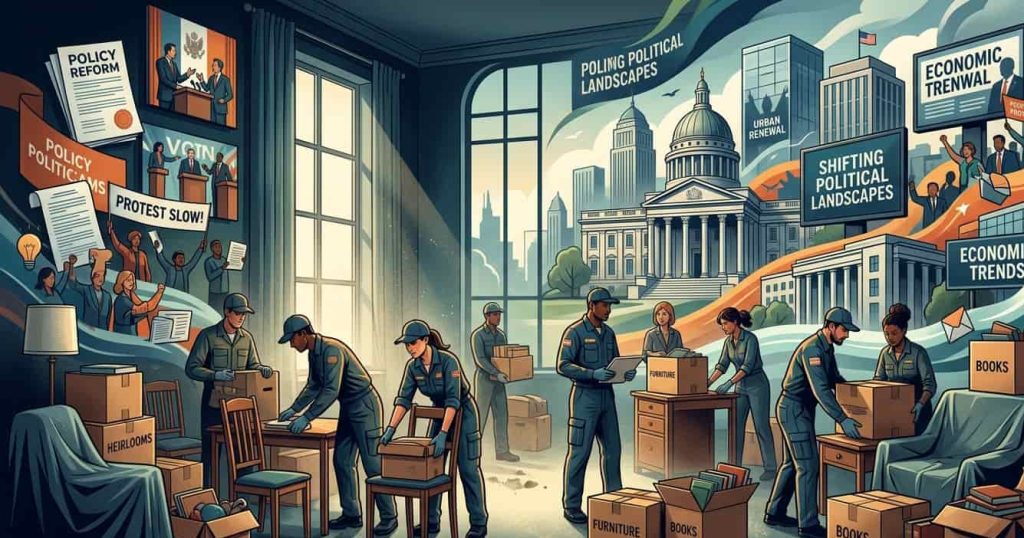
Political stability also plays a major role in determining how estate clearance businesses invest and expand. In general, predictable regulations and stable governments are strong indicator of healthy real estate activity, housing market confidence, and business investment. Because when markets are stable:
- Property transactions increase
- Renovation projects become more common
- Relocation and migration patterns remain active
- Commercial real estate investment expands
These conditions create consistent demand for estate clearance services. Conversely, periods of political instability may slow real estate activity and reduce consumer spending, affecting industry growth.
To remain competitive, many estate clearance companies are adapting through technology and operational modernization. Digital booking systems, logistics software, inventory tracking, and customer management platforms help businesses operate more efficiently in changing economic and political environments.
How Politics Impacts Estate Clearance Services?
The estate clearance industry may not appear political at first glance, but it is deeply connected to government policy, economic reform, and housing market dynamics. Political shifts influence everything from property turnover and inheritance management to environmental compliance and urban redevelopment.
As governments change and markets evolve, estate clearance companies often find themselves responding directly to new economic realities and regulatory frameworks. Their work reflects broader social and political trends involving housing, sustainability, and urban transformation.
Estate clearance businesses are more than removal services. They are operational partners within the changing landscape of property ownership, economic adaptation, and modern urban development.