
Behind Closed Doors, World Leaders Are Discovering Full Body Red Light Therapy After Marathon Summits

Relaxed professional resting on a glowing red light therapy bed indoors calmly.

The lighting is fluorescent and forgettable, the same as it is in a thousand other conference rooms around the world. Participants sit through the same meeting for twelve, sometimes sixteen hours, finalizing documents while translators work beside them and support staff pass notes down the length of the table.

After enough of these, it is not surprising to see leaders who look visibly older than they did at the start of the week.

Some say they age years in a single weekend. In the gaps between sessions, backroom diplomacy continues, and somewhere in that same space, a quieter priority has emerged: getting people functional again. One of the newer tools showing up in that recovery window is full body red light therapy.

The process is not complicated. A person lies down, waits twenty minutes, and gets up feeling like something has been restored rather than depleted. Most describe it less as relaxation and more as a reset, a return to baseline before the next round begins.

Undiscussed Physical Strain

Summit diplomacy does things to the body that rarely get written about. Jet lag stacks on top of sleep deprivation, and the stress is not the kind that comes and goes. It holds. Staffers joke, with only partial exaggeration, that the G7 is essentially a stress test to find out how much cortisol a human body can carry before something gives.

One former trade delegate, speaking without attribution because she still operates in these circles, put it plainly: “You’re making decisions that affect millions of people while running on four hours of sleep and terrible hotel coffee. That’s not a great system.”

Under those conditions, it is not hard to understand why recovery technology has found an audience here. Red and near-infrared light therapy works by penetrating tissue and stimulating cellular mitochondria.

Studies suggest it can bring down inflammation, reduce muscle soreness, and help the body recover from both physical and mental strain. For a person who has spent three days in a windowless room arguing trade tariffs, that is not a luxury. It is a practical need.

Initial Indicators of a Shift

None of this got announced. Like most things in the wellness industry, it moved quietly, starting in private clinics in major cities, then spreading through personal referrals among medical staff and their clients.

A number of well-appointed recovery centers in Geneva and Washington now report a steady presence of government clients, though they are careful not to say much beyond that.

What is notable is that exhaustion does not care about which side of the table you sit on. A senator’s aide and a foreign minister’s staffer may have nothing in common on paper, but after eight hours of closed-door negotiations, they are going to agree on one thing: they need to recover.

That particular consensus cuts across every political line there is.

The Physical is as Important as the Mental

Most people think of political performance in cognitive terms, such as quick thinking, message discipline, and reading the room. But endurance is the foundation all of that sits on. A sleep-deprived official is more likely to lose the thread, read a signal wrong, or react poorly to something that was meant to provoke a reaction.

There are plenty of cases where one visible moment of fraying, something that looked minor from the outside, ended up changing the direction of an entire negotiation.

This is part of why some advisors have started building recovery into the schedule the same way they build in briefings.

A few facilities that have long served professional athletes have started quietly extending that same service to political staff, applying the same protocols for inflammation and muscle repair to people whose physical exertion mostly consists of moving between a podium and a conference chair.

A Small Ritual With Outsized Effects

The more telling detail about these sessions is not what they do to the body but what they represent. Political and diplomatic culture has traditionally treated exhaustion as evidence of dedication.

Running on no sleep was something people mentioned to prove they were serious. The fact that staff are now carving out twenty minutes for recovery and doing it without apology signals something shifting in how people in these roles understand the connection between physical condition and the quality of decisions.

This is, in its own way, part of how the role of politics in shaping society gets renegotiated at a practical level, not through legislation but through the daily habits of the people doing the work.

One staffer described it as “the first twenty minutes in three days where nobody needed anything from me.” That alone tells you something. The sessions fit without much disruption. They are short enough that a person can step out of a fully booked day, go through one, and return before their absence registers.

What This Predicts for the Future of High-Stakes Work

This is not really a story about light wavelengths. It is about a slow shift in what demanding professional cultures are willing to admit about the human body. For a long time, wearing yourself down was treated as proof of commitment.

There is now at least a working acknowledgment, in some rooms, that a person running on empty makes worse calls and that recovery is not softness but sound planning.

The fluorescent lights have not changed. The hours have not shortened. But somewhere between the final argument of the day and the next departure gate, more people are starting to let their bodies catch up. That adjustment, small as it looks, may matter more than it appears.
How Planning Policies in Australia Shape Residential Fencing, Landscaping, and Property Improvements

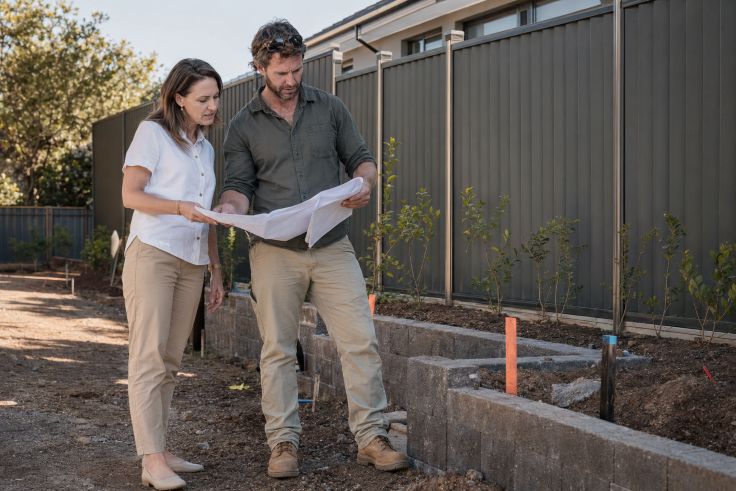
Homeowner and contractor review garden plans

Australian residential construction is regulated through state legislation, local planning schemes, building rules, and environmental controls. These requirements can influence a project’s height, location, materials, drainage, vegetation removal, and approval pathway. Because regulations differ between jurisdictions and properties, homeowners should investigate the rules applying to their land before finalizing an outdoor design.

Early regulatory checks can prevent a visually appealing plan from becoming difficult or expensive to build. When homeowners consult Master Groups licensed contractors or another appropriately qualified provider, the discussion should cover more than finishes and costs. It should also identify possible permits, site limitations, licensing requirements, and responsibilities. This is a practical compliance step, rather than an endorsement of any company or public policy.

The Case for Planning Controls

Planning controls exist to manage how private development affects neighbors, streets, infrastructure, safety, and the environment. A high front fence, for example, may reduce visibility near a driveway or change the established appearance of a street. Retaining walls and extensive paving can alter ground levels and redirect water toward adjoining properties. Tree removal may affect habitat, shade, erosion, or the character of a neighborhood.

Reports from the NSW Planning Portal show how detailed these controls can become. Some fences qualify as exempt development when they satisfy prescribed standards. In certain rural and environmental zones, the listed requirements include a maximum height of 1.8 meters and the use of post-and-wire or post-and-rail construction. A design that falls outside the relevant standards may require another approval pathway.

Victoria illustrates the local nature of the system. Guidance from Planning Victoria explains that each council has its own planning scheme and that permit requirements can vary between municipalities. It also distinguishes a planning permit, which addresses land use and development, from a building permit, which focuses more directly on construction. Some projects may require both.

The Argument for Greater Homeowner Choice

From a homeowner’s perspective, regulation can appear disproportionate when the proposed work is modest. Replacing a fence, installing paving, or reshaping a garden may seem like a private decision. Approval costs and waiting periods can also affect schedules and budgets. Prescriptive controls may restrict material choices or prevent a preferred layout, even when the owner believes the project presents little risk.

This concern helps explain why streamlined and exempt pathways exist. The NSW Planning Portal states that qualifying projects can include fences, garden sheds, carports, and other minor works, provided every applicable development standard is met. Victoria’s VicSmart process similarly offers a simplified assessment route for eligible applications. These pathways seek to preserve reasonable design freedom while retaining clear limits.

Where Zoning and Overlays Enter the Decision

A property’s zoning is only one part of the assessment. Heritage, bushfire, flooding, environmental, and design overlays can introduce additional requirements. These controls show how politics affects new home development by translating public priorities into practical rules for land use and construction. The same fence or retaining wall may therefore be permissible on one residential lot but restricted on another. Corner properties may also face visibility requirements, while work near roads, easements, services, or public land can require separate consent.

Homeowners should begin by checking the title, planning maps, council controls, and any existing development consent. They can then compare the proposed height, setback, materials, excavation, and ground levels with the relevant standards. This sequence is valuable because altering a concept plan is generally easier than redesigning work after a quotation has been accepted.

Landscaping Is Not Always Permit-Free

Soft landscaping, such as planting garden beds, is often less regulated than structural work. However, landscaping can move into a controlled category when it includes retaining walls, substantial excavation, drainage systems, decks, masonry structures, or major tree removal. The NSW Planning Portal confirms that earthworks and retaining walls may qualify as exempt development only when the relevant state standards are satisfied.

Vegetation rules deserve separate attention. The NSW Department of Climate Change, Energy, the Environment and Water explains that councils manage many clearing approvals in urban and environmental protection areas, while Local Land Services handles relevant rural-land matters. This means ownership of a tree does not automatically give an unrestricted right to remove it.

Environmental Design and Water Management

Environmental policy also shapes what happens after rain falls. Hard paving can increase runoff, while poorly planned earthworks may send sediment into drains and waterways. Guidance published by the Australian Government’s Your Home resource recommends reducing hard surfaces and using careful landscaping to slow stormwater movement. Its design guidance also notes that permeable areas can improve water retention and reduce site runoff.

These principles can be translated into practical project choices:

  • Retain established vegetation where approvals and site conditions allow.
  • Use permeable paving or planted areas to reduce unnecessary hard surfaces.
  • Plan drainage before changing levels or constructing retaining walls.
  • Protect stormwater systems from soil and building waste during construction.
  • Check bushfire and habitat controls before choosing fencing materials.

Why Contractor Licensing Matters

Planning approval and contractor licensing serve different purposes. Approval authorizes specified development, while licensing helps establish whether a provider is legally qualified to contract for regulated work. Building Commission NSW states that fencing work worth more than $5,000 in labor and materials generally requires a contractor license in New South Wales. The same threshold applies to regulated structural landscaping work.

Rules vary across Australia, so homeowners should verify a provider through the relevant state register and confirm that the license category matches the proposed work. They should also obtain a written scope identifying materials, approvals, drainage, site preparation, exclusions, and responsibility for inspections. A license does not replace planning approval, and council approval does not remove the need for a properly authorized contractor.

A Balanced Path from Policy to Construction

Public policy sets the boundaries within which residential improvements occur. Private decisions determine how a project looks, functions, and fits the household’s budget. Treating these roles separately helps homeowners avoid viewing regulation as design advice or assuming that an attractive design must automatically comply.

The most workable approach is to investigate the land first, develop the design second, and appoint suitable professionals before construction begins. As climate resilience, housing density, and environmental protection receive greater attention, outdoor construction rules will continue to evolve. Homeowners who build regulatory checks into early planning will be better prepared to create attractive, practical, and compliant outdoor spaces.