
The lighting is fluorescent and forgettable, the same as it is in a thousand other conference rooms around the world. Participants sit through the same meeting for twelve, sometimes sixteen hours, finalizing documents while translators work beside them and support staff pass notes down the length of the table.
After enough of these, it is not surprising to see leaders who look visibly older than they did at the start of the week.
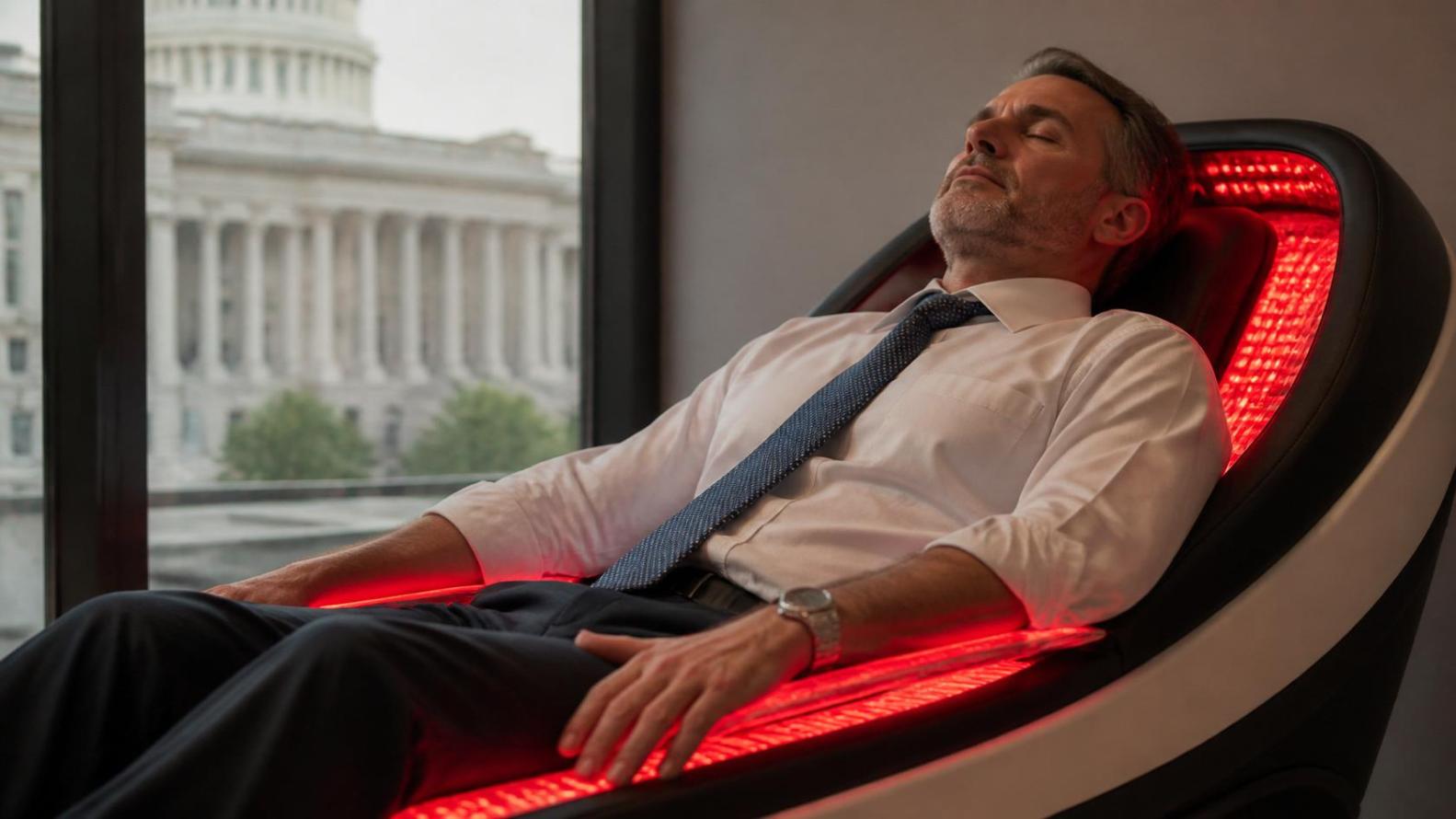
Some say they age years in a single weekend. In the gaps between sessions, backroom diplomacy continues, and somewhere in that same space, a quieter priority has emerged: getting people functional again. One of the newer tools showing up in that recovery window is full body red light therapy.
The process is not complicated. A person lies down, waits twenty minutes, and gets up feeling like something has been restored rather than depleted. Most describe it less as relaxation and more as a reset, a return to baseline before the next round begins.
Undiscussed Physical Strain
Summit diplomacy does things to the body that rarely get written about. Jet lag stacks on top of sleep deprivation, and the stress is not the kind that comes and goes. It holds. Staffers joke, with only partial exaggeration, that the G7 is essentially a stress test to find out how much cortisol a human body can carry before something gives.
One former trade delegate, speaking without attribution because she still operates in these circles, put it plainly: “You’re making decisions that affect millions of people while running on four hours of sleep and terrible hotel coffee. That’s not a great system.”
Under those conditions, it is not hard to understand why recovery technology has found an audience here. Red and near-infrared light therapy works by penetrating tissue and stimulating cellular mitochondria.
Studies suggest it can bring down inflammation, reduce muscle soreness, and help the body recover from both physical and mental strain. For a person who has spent three days in a windowless room arguing trade tariffs, that is not a luxury. It is a practical need.
Initial Indicators of a Shift
None of this got announced. Like most things in the wellness industry, it moved quietly, starting in private clinics in major cities, then spreading through personal referrals among medical staff and their clients.
A number of well-appointed recovery centers in Geneva and Washington now report a steady presence of government clients, though they are careful not to say much beyond that.
What is notable is that exhaustion does not care about which side of the table you sit on. A senator’s aide and a foreign minister’s staffer may have nothing in common on paper, but after eight hours of closed-door negotiations, they are going to agree on one thing: they need to recover.
That particular consensus cuts across every political line there is.
The Physical is as Important as the Mental
Most people think of political performance in cognitive terms, such as quick thinking, message discipline, and reading the room. But endurance is the foundation all of that sits on. A sleep-deprived official is more likely to lose the thread, read a signal wrong, or react poorly to something that was meant to provoke a reaction.
There are plenty of cases where one visible moment of fraying, something that looked minor from the outside, ended up changing the direction of an entire negotiation.
This is part of why some advisors have started building recovery into the schedule the same way they build in briefings.
A few facilities that have long served professional athletes have started quietly extending that same service to political staff, applying the same protocols for inflammation and muscle repair to people whose physical exertion mostly consists of moving between a podium and a conference chair.
A Small Ritual With Outsized Effects
The more telling detail about these sessions is not what they do to the body but what they represent. Political and diplomatic culture has traditionally treated exhaustion as evidence of dedication.
Running on no sleep was something people mentioned to prove they were serious. The fact that staff are now carving out twenty minutes for recovery and doing it without apology signals something shifting in how people in these roles understand the connection between physical condition and the quality of decisions.
This is, in its own way, part of how the role of politics in shaping society gets renegotiated at a practical level, not through legislation but through the daily habits of the people doing the work.
One staffer described it as “the first twenty minutes in three days where nobody needed anything from me.” That alone tells you something. The sessions fit without much disruption. They are short enough that a person can step out of a fully booked day, go through one, and return before their absence registers.
What This Predicts for the Future of High-Stakes Work
This is not really a story about light wavelengths. It is about a slow shift in what demanding professional cultures are willing to admit about the human body. For a long time, wearing yourself down was treated as proof of commitment.
There is now at least a working acknowledgment, in some rooms, that a person running on empty makes worse calls and that recovery is not softness but sound planning.
The fluorescent lights have not changed. The hours have not shortened. But somewhere between the final argument of the day and the next departure gate, more people are starting to let their bodies catch up. That adjustment, small as it looks, may matter more than it appears.